

George Clooney’s Critical Insights on Kamala Harris’ Political Future
In a recent discussion, George Clooney has shared his reflections regarding the ramifications of Kamala Harris’ nomination for the presidency. Clooney, a Hollywood star turned political commentator, expressed significant concerns about how Harris was positioned as a candidate in the upcoming elections. His critical eye has not only caught the attention of media outlets but has sparked debate across political spectrums.
Clooney articulated that one of the major challenges Harris faced was the necessity to distance herself from her own record while simultaneously advocating for her future vision. This paradox, he argues, is incredibly strenuous for any candidate. For instance, during his interview on CBS, Clooney stated, “It’s very hard to do if the point of running is to say, ‘I’m not that person’. It’s hard to do, and so she was given a very tough task.” Such comments underline Clooney’s belief that the Democratic Party’s strategy in nominating Harris might not resonate well with the electorate, putting them at a crucial disadvantage in the upcoming elections.
The ramifications of such a nomination also extend beyond mere political strategy; they touch upon the wider implications for representation within the Democratic Party. As the first female Vice President and a woman of color, Harris embodies hope for many, yet Clooney emphasizes that her effectiveness is compromised by the need to navigate her past as she looks forward to the future. This delicate balancing act points to the complex dynamics present in modern US politics, particularly when it comes to the decisions made by voters and party strategists alike.
Moreover, Clooney’s perspective on Harris’ candidacy does not solely stem from an objective analysis, but also from a deeply personal investment in the political landscape of his country. He has publicly backed her in the past, showcasing a desire for progressive change within the framework of the Democratic Party.
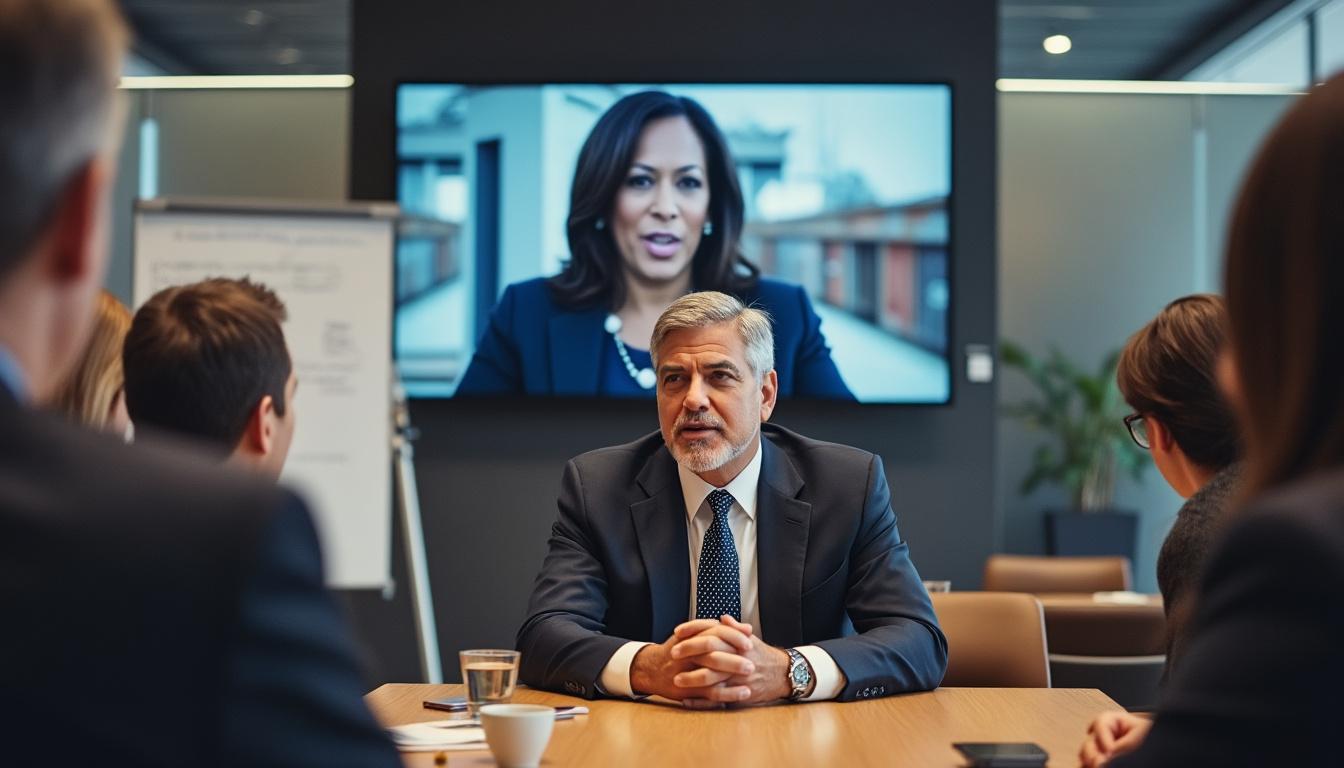
Clooney’s Commentary on Celebrity Influence in Politics
The intersection of celebrity culture and politics often engenders controversy, particularly when individuals like George Clooney become vocal about their viewpoints. Many supporters herald Clooney as an influential figure and an advocate for democratic values, while critics argue his celebrity status clouds his judgment in political matters. Notably, Georges’s commentary on Harris has ignited discussions regarding the role celebrities should play in shaping public opinion and influencing political discourse.
Clooney himself has acknowledged the responsibility that comes with his platform, admitting that he is often thrust into the political spotlight due to his fame. This duality of being both an A-list actor and a political critic showcases the intricate relationship between the entertainment industry and US politics. It raises essential questions: How much weight do celebrities carry in shaping political narratives, and what are the potential consequences of that influence on election outcomes?
In exploring these questions, Clooney’s situation is amplified by his own reflections on being blamed for Harris’s election outcome. He has responded to these criticisms by expressing disappointment and asserting that being labeled as a “scapegoat” for political missteps undermines the collective responsibility of the party’s leadership. This acknowledgment reveals Clooney’s awareness of the larger mechanisms at play within political dynamics, challenging the notion that one individual can be solely accountable for the failures of a campaign.
- Clooney has publicly supported various Democratic candidates in the past.
- He believes in the potential for change within the party’s structure.
- Critics argue that celebrity opinions can skew public perception.
- Clooney emphasizes the importance of collective responsibility in political campaigns.
A New Perspective on Hunter Biden’s Reactions
In a related narrative, George Clooney has weighed in on Hunter Biden’s response to his op-ed published in the New York Times last year. Clooney’s commentary bridges the personal with the political, as he reflects on the delicate interactions among prominent figures in US politics today. In his response, he often hints at a desire to uphold camaraderie, even among political adversaries, to foster growth and understanding within the party.
During his interview, when pressed about Hunter’s reaction, Clooney displayed a sense of diplomacy. He stated he wanted to avoid engaging in public disputes, highlighting the necessity of focusing on broader political dialogues rather than personal conflicts. This standpoint reveals Clooney’s strategic approach to navigating discussions around the Democratic Party’s current challenges and underscores the importance of unity among party members, especially during election cycles.
Such discussions regarding Hunter Biden point to the interplay between personal struggle and public perception that defines much of today’s political climate. Clooney’s acknowledgment of Hunter’s ongoing recovery and well-being illustrates his empathetic approach to this situation, suggesting that personal circumstances should also be considered in the throes of political discourse.
| Name | Political Position | Key Comment |
|---|---|---|
| George Clooney | Actor, Philanthropist | “It’s difficult to run against one’s own record.” |
| Hunter Biden | Public Figure | Addressed Clooney’s op-ed directly in his response. |
| Kamala Harris | Vice President | “Running against herself was a considerable challenge.” |
The Broader Impact of Celebrity Voices in Political Narrative
The influence of celebrities like George Clooney on political narratives cannot be overstated. As someone who has long been engaged in social justice issues, Clooney’s voice resonates with many voters, particularly millennials and younger generations who value authenticity and relatability in political discussions. His concerns about Harris’s candidacy contribute to a growing conversation about how these figures can effectively mobilize support within substantially diverse voter bases.
Additionally, the way Clooney articulated his thoughts reflects a burgeoning trend in which celebrities are expected to be not just entertainers but also advocates for social issues. From climate change initiatives to campaigns for equality, celebrities are increasingly taking on roles as activists. However, this movement raises questions about the implications of such responsibilities and whether they are always welcomed or beneficial within political contexts.
As the political landscape evolves, so too will the dialogues surrounding celebrity involvement in politics. This dynamic is poised to be critical, especially in the run-up to the election, where public sentiment can sway dramatically based on the cultural figures endorsing candidates. Clooney’s insights thus may not only impact perceptions of Harris but can also shape the broader electoral landscape.
- Belief that celebrities can effectively raise social issues.
- Concerns over how celebrity influence may distort political sentiments.
- Recognition of celebrities as potential mobilizers for underrepresented demographics.
- The role of public opinion shaped by celebrity advocacy.
The Discussion Surrounding Strategic Political Operations
Clooney’s reflections have sparked debates about the efficacy of the Democratic Party’s operational strategies. His criticism of Kamala Harris abruptly stands as a catalyst for others within the party to assess their moves moving into crucial electoral phases. Clooney pointed to the possible detrimental outcomes that can arise when candidates are not aptly aligned with the current political climate or public expectations.
Staying ahead of political trends is paramount for any campaign, and Clooney’s stance emphasizes the importance of foresight and adaptability. The ability to predict voter sentiment and tailor responses accordingly is essential in an ever-evolving political landscape. This necessity aligns with Clooney’s broader commentary, urging the Democratic Party to reevaluate their strategies to avoid repeating past mistakes witnessed in election cycles.
Moreover, the idea of ‘running against one’s record’ pops up as an essential topic for debate among political analysts. Clooney’s critique directly ties into a broader conversation about accountability and how candidates should present their past to the electorate. Should they acknowledge missteps or attempt to distance themselves from unfavorable policies? Such reflections hold far-reaching implications for future campaigns, including candidate selection and messaging tactics.
| Strategy | Description | Potential Impact |
|---|---|---|
| Aligning with Voter Sentiment | Adapting policies to reflect current public opinions. | Increases chances of winning key demographics. |
| Addressing Past Records | Confronting previous mistakes openly. | Can build trust or lead to vulnerability. |
| Celebrity Involvement | Leveraging famous figures to boost visibility. | Can enhance campaign reach but also risk misrepresentation. |
Public Reactions and Criticism
Clooney’s outspokenness has not been without backlash. Various factions within the Democratic Party have either echoed support for his comments or criticized him for overstepping bounds in political matters. This mixed response highlights the complex dynamics at play within party loyalty and individual expression. While some praise Clooney for his willingness to critique a candidate, others see it as undermining party unity at a crucial time.
The intersection of public criticism and celebrity opinions is especially relevant to current political discourse. It raises notable questions about how influential figures can simultaneously support candidates while critiquing their strategies. As voters continue to observe these dynamics, it becomes essential for political figures and their supporters to carefully navigate criticism to ensure they contribute positively to the party’s goals.
- Clooney’s comments stir debate on party unity vs. honest criticism.
- Various factions within the Democratic Party respond differently to his insights.
- The relationship between celebrity influence and voter sentiment continues to evolve.
- Discussions expand to include strategic implications for upcoming elections.