

Exploring Benedict Cumberbatch’s MCU Experience and Its Influence on His Role in The Thing With Feathers
Benedict Cumberbatch has made a name for himself over the years, not just through his acclaimed roles in independent films but also as a defining figure in the Marvel Cinematic Universe (MCU). His portrayal of Doctor Strange has not only brought him fame but has also significantly influenced his approach to acting in projects like The Thing With Feathers. This film, which delves into the complexities of grief and family, showcases Cumberbatch’s ability to draw from his superhero role in unexpected ways.
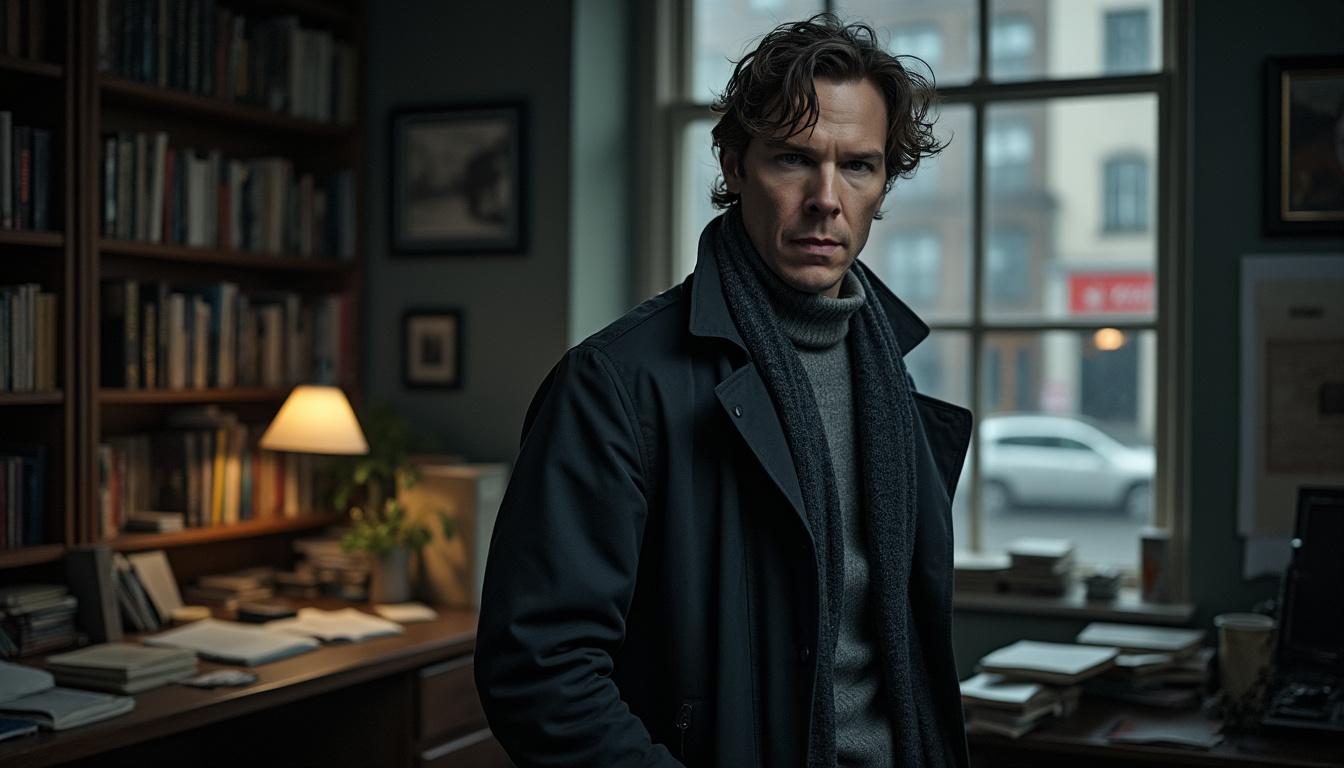
In a recent exclusive interview, Cumberbatch revealed how his experiences in the MCU have provided him with valuable insights into character development and emotional depth, essential for his portrayal of a father grappling with the loss of his wife.
The film’s narrative follows a father who must navigate the chaotic waters of grief while raising two young sons after his wife’s death. During the interview, Cumberbatch elaborated on the dual theme of grief and its manifestations, reflected not only through his character’s struggles but also the role of Crow, a physical embodiment of his inner turmoil.
He noted that the complexity within both Doctor Strange and the protagonist of The Thing With Feathers resonates on different levels. Both characters deal with various forms of conflict—be it supernatural forces in the MCU or the emotional upheaval in his new film. The parallels drawn are vital in understanding Cumberbatch’s nuanced performances. His discussions around his roles in both projects illuminate a recurring theme: the transformative power of accepting one’s grief.
Cumberbatch stated, “It’s a universal experience of the human condition, grieving, and you can’t love without losing at some point.” This sentiment compounds the notion that every role adds a new layer to an actor’s skill set, allowing them to explore deeper emotional landscapes.
Character Development: From the MCU to Emotional Nuances
Cumberbatch’s role as Doctor Strange offers a unique perspective on power and vulnerability. The acting insights gained from working within the MCU have imbued him with an understanding of how to portray complex emotions. In The Thing With Feathers, he channels this experience into his performance as a grieving father, embodying a character who is not only facing loss but also reconciling his identity as a parent.
A deep dive into character development reveals how Cumberbatch reconciles the fantastical elements of his MCU hero with the raw, emotional authenticity of a father dealing with grief. The layered script pushes him to display a spectrum of emotions ranging from despair to acceptance, allowing viewers to connect with his struggles on a deeper level.
When asked about his preparation for the role, Cumberbatch explained that he actively sought to engage with his experiences from the MCU while crafting this character. This indicates a deliberate process of pulling from his superhero narrative, where comic book characters often face existential questions masked under fantastical scenarios.
| Character | Film/Series | Key Themes |
|---|---|---|
| Doctor Strange | Marvel Cinematic Universe | Power, Sacrifice, Identity |
| Dad (The Thing With Feathers) | The Thing With Feathers | Grief, Acceptance, Vulnerability |
Through this lens, Cumberbatch articulates how the ability to delve into such contrasting characters enhances his craft. With every performance, he seeks to challenge himself, whether it’s battling cosmic entities or confronting the emotional shadows of familial loss. Acting in films like The Thing With Feathers signifies a departure from the superhero persona, yet he realizes that the same core principles of character development apply.
Grief, Acceptance, and the Process of Healing in The Thing With Feathers
The central theme of grief in The Thing With Feathers resonates profoundly with audiences. Cumberbatch emphasizes that the film does not merely present grief as a hurdle to overcome but rather as an integral part of life to accept. This approach differentiates the film in a landscape where grief is often depicted as something to defeat.
His character’s journey toward acceptance reflects an essential aspect of healing. Cumberbatch admits that he is intrigued by roles that allow for such exploration. Within the film, the Crow symbolizes the chaos of grief, personifying the struggles and dark thoughts that often accompany such loss.
When discussing the significance of the Crow, Cumberbatch stated, “It’s a shared family — transformative being that becomes Crow.” This perspective aligns with how he approached his character arc, acknowledging that grief is not a solitary journey. Instead, it is a communal experience that invites connections between individuals.
- Understanding the multifaceted aspects of grief
- Exploring dynamic familial relationships
- Highlighting the importance of shared emotional experiences
This collective embrace of grief ultimately leads to moments of vulnerability that reveal the underlying strength in familial love. These interactions create a harmonious balance between darkness and light, illustrating how acceptance can pave the way for healing.
The Role of Humor and Surrealism in Navigating Grief
The elements of humor and surrealism incorporated within The Thing With Feathers showcase Cumberbatch’s versatility. He relayed the influence of film genres ranging from horror to domestic drama. This hybridization allows the narrative to navigate the complexities of loss while maintaining a level of depth that could otherwise succumb to bleakness.
Cumberbatch described an intriguing scene featuring the Crow’s chaotic nature as a “wild day at the office.” He notes that, although audiences might initially perceive the surreal elements as goofy, they serve a larger purpose in reflecting the absurdity inherent in grief—a testament to the intricate bond between tragedy and dark comedy.
| Genre | Emotion | Significance |
|---|---|---|
| Drama | Grief | Rooted in realism |
| Horror | Fear | Embodies the unknown |
| Dark Comedy | Absurdity | Lightens the narrative weight |
This integration resonates well with audiences who may find familiarity in the absurd moments of life amidst their trials. Cumberbatch’s ability to relay such emotions reflects his extensive versatility honed during his time in the MCU, where tonal shifts are a staple in superhero narratives.
Future Endeavors: Embracing Challenges Beyond the MCU
As Cumberbatch looks ahead, he expresses a willingness to tackle challenges that go beyond the Marvel universe. He shared his enthusiasm for exploring projects that push his boundaries and allow for a deeper understanding of character dynamics. The journey in The Thing With Feathers is just one example of how this actor continually searches for diverse experiences in storytelling.
While reports circulate regarding his future in the MCU—especially concerning Doctor Strange 3—Cumberbatch remains focused on the importance of versatility in his craft. The ability to shift gears between blockbuster films and indie dramas exemplifies a growing trend where actors are seeking a balance between commercial success and meaningful storytelling.
- Balancing roles in blockbusters with character-driven films
- Exploring unique narratives that challenge traditional storytelling
- Utilizing experiences from previous roles to enrich performances
As indicated in an interview about Doctor Strange and his ambitions beyond the MCU, Cumberbatch’s journey reflects a broader narrative in contemporary cinema, where actors strive to contribute to diverse storytelling avenues. His approach mirrors the fluidity that modern audiences crave from actors, encouraging a dynamic interplay between their fictional roles and personal growth.
Giving A Voice to Vulnerability and Strength
Ultimately, Cumberbatch’s journey through grief in The Thing With Feathers speaks to the universal human experience, showcasing the intricacies of vulnerability intertwined with strength. As he continues to garner acclaim within the industry, he remains grounded in the belief that while loss may manifest in many forms, its resolution is often tied intricately to love, acceptance, and familial bonds.
Benedict Cumberbatch’s experiences, especially his pivotal role in the Marvel Cinematic Universe, have equipped him with an arsenal of emotional intelligence, enabling him to articulate complex themes found in both superhero narratives and intimate dramas alike.