
Years Later: An Overview of The Bone Temple
Years Later: The Bone Temple offers a unique take on the zombie genre, stepping into a landscape crafted from threads of horror, comedy, and post-apocalyptic drama. It stands as the fourth installment in the 28 Days Later franchise. Directed by Nia DaCosta and penned by Alex Garland, this film presents an ambitious narrative that explores the aftermath of the Rage Virus, yet, it struggles to maintain a consistent tone beyond its eclectic premise. The film’s split focus between two main storylines provides a glimpse into a world that feels both familiar and unsettlingly strange.

The Underlying Themes of The Bone Temple
At its core, The Bone Temple delves into themes of memory, morality, and the remnants of societal structure following a cataclysmic event. The film juxtaposes the horrifying realities of life impacted by the undead with moments aimed at humor, raising questions about humanity’s ability to evolve—or devolve—under pressure. The narrative is set against a backdrop where the undead, typically a dominant theme in zombie narratives, are relegated to the background. The real threat emerges from human antagonists, specifically the cult-like gang known as “the Jimmys,” led by the dangerously charismatic Sir Lord Jimmy Crystal, played by Jack O’Connell.
This cult serves as a metaphor for the breakdown of civilization, embodying the chaos that ensues when societal norms disintegrate. Yet, the film misses the mark by creating a character in Crystal that lacks depth. O’Connell excels in portraying a volatile character that registers on a primal level, but without underlying motivations, the character feels flattened, undermining the film’s exploration of why such groups form in a post-apocalyptic landscape.
Exploring the Dual Narratives
The Bone Temple adeptly introduces two distinct yet connected story arcs. On one hand, viewers follow Spike, a teenager previously established as a beacon of hope and resilience in the franchise. His journey becomes a compelling narrative as he’s pulled into the twisted world of the Jimmys, torn between survival and his moral compass. The character’s potential is immense, as his internal struggle against indoctrination provides fertile ground for emotional exploration. Yet, the film falters by relegating Spike to a supporting role, showcasing moments that feel disjointed and underdeveloped.
On the flip side, the film intertwines the story of Dr. Ian Kelson, portrayed by Ralph Fiennes. His tireless pursuit of a cure for the Rage Virus positions him as a tragic hero, yet his narrative oscillates erratically between absurd humor and heavy themes of guilt. This inconsistency diminishes the palpable sense of urgency that would typically accompany a race against extinction, making significant portions of the film feel low-stakes and meandering.
Spike’s Role in the Franchise’s Legacy
The decision to sideline Spike, who symbolizes the younger generation facing the apocalypse, is perplexing. In the previous installment, he captured the audience’s empathy as he thrived amidst chaos. In The Bone Temple, his arc is muted and lacks impactful resonance. Instead of positioning him as the protagonist, the story diverts focus to Kelson’s philosophizing and Jimmy Crystal’s antics. This choice drains the emotional weight from a narrative that desperately needs it, stripping the film of the engaging dynamic that characterized its predecessor.
A Controversial Approach to Violence and Humor
Certainly, The Bone Temple pushes boundaries with its approach to violence and dark humor. The first act, in particular, is harsh and relentless, with graphic depictions of violence that feel more akin to torture-porn than commentary on humanity’s deterioration. Such moments, while intended to explore the depth of moral collapse, are marred by the jarring tonal shifts that follow. The audience finds themselves laughing moments after witnessing extreme brutality, and the effect is disorienting, detracting from the intended gravitas of the moment.
The Absence of the Undead Threat
Moreover, The Bone Temple grapples with the underutilization of its signature threat—the rage-infected. Unlike the earlier films where the undead played a critical role in shaping the tension and stakes, here they are present merely as an afterthought. They serve more as atmospheric elements rather than the relentless predators they were previously. The primary conflict derives from the humans who embody the horrors of survival rather than the undead which are often used to symbolize humanity’s collapse. This pivot, while interesting, risks alienating viewers who expect a more traditional horror experience from a zombie film.
The backing story of the cult’s nefarious actions could have benefited from exploring deeper insights into their motivations. Without understanding why characters like Sir Lord Jimmy Crystal act the way they do, the viewer is left with nothing but a sense of confusion amidst the chaos.
Visual and Technical Achievements
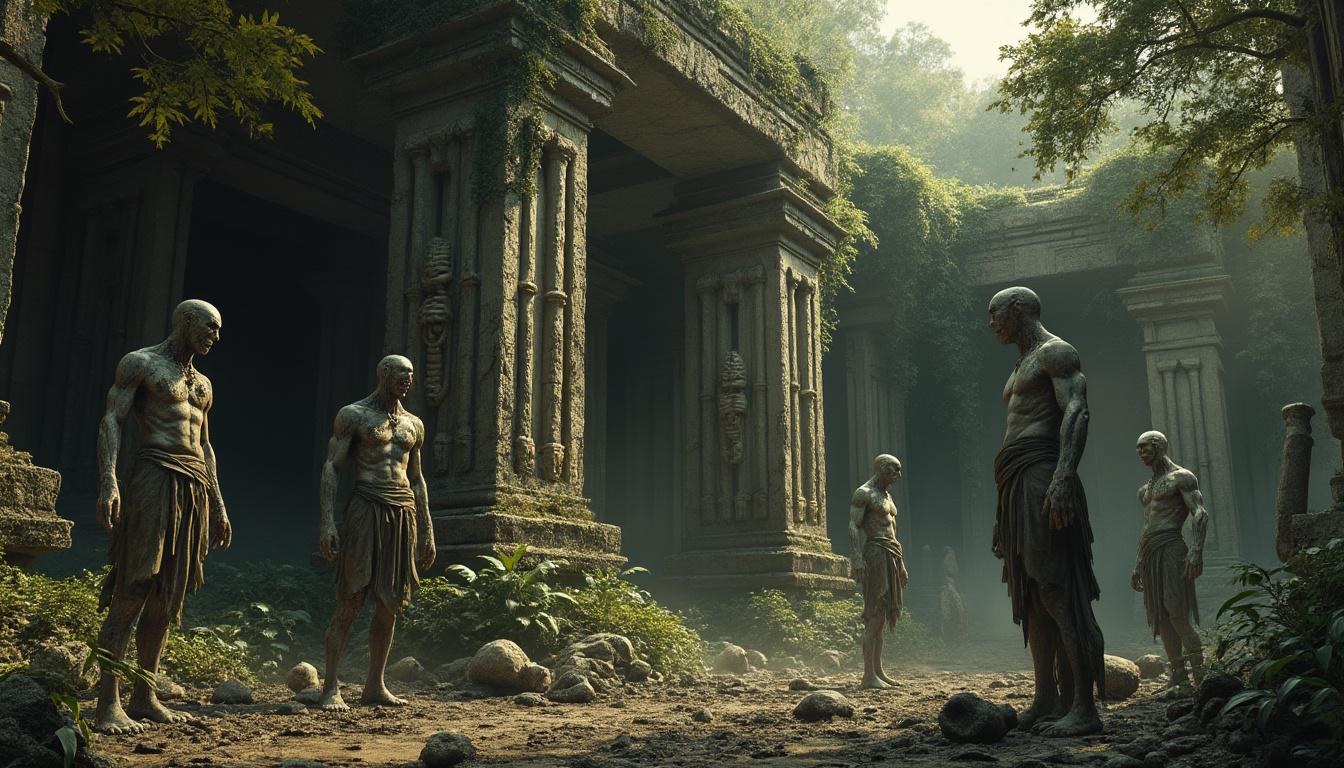
Despite its narrative weaknesses, The Bone Temple showcases impressive visuals, with DaCosta’s direction bringing to life a hauntingly decayed Britain steeped in originality. The production design captures the grotesque rituals and tributes to the fallen with care and attention to detail. Impressive cinematography echoes the bleakness of a world in decay, encapsulating both the horror of human cruelty and the vestiges of lost humanity.
Yet, these aesthetic achievements cannot mask the film’s deeper issues. It attempts to juggle a range of tonal elements and thematic aspirations that do not gel cohesively. The violence juxtaposed with attempts at humor creates a dissonance that ultimately leaves viewers questioning the film’s overall intention.
Charting the Impact of The Bone Temple in the Franchise
In summary, while The Bone Temple introduces ambitious ideas, it ultimately fails to deliver a coherent narrative that resonates on multiple levels. The storyline’s split focus leads to an emotional disconnection from its characters. Additionally, the film’s focus on human antagonists over the more significant threat of the undead misses an opportunity to fully explore the horror of their existence. As the film moves through various ideas—philosophical quandaries, moral dilemmas, and the terror of humanity—it becomes less a compelling horror film and more a puzzling experiment missing its intended mark.
| Element | Strength | Weakness |
|---|---|---|
| Storyline | Diverse narratives | Lack of emotional depth |
| Character Development | Strong potential with Spike and Kelson | Underutilization of key characters |
| Visuals | Stunning production design | Tonally disjointed |
| Violence and Humor | Bravely confrontational | Inconsistent execution |