
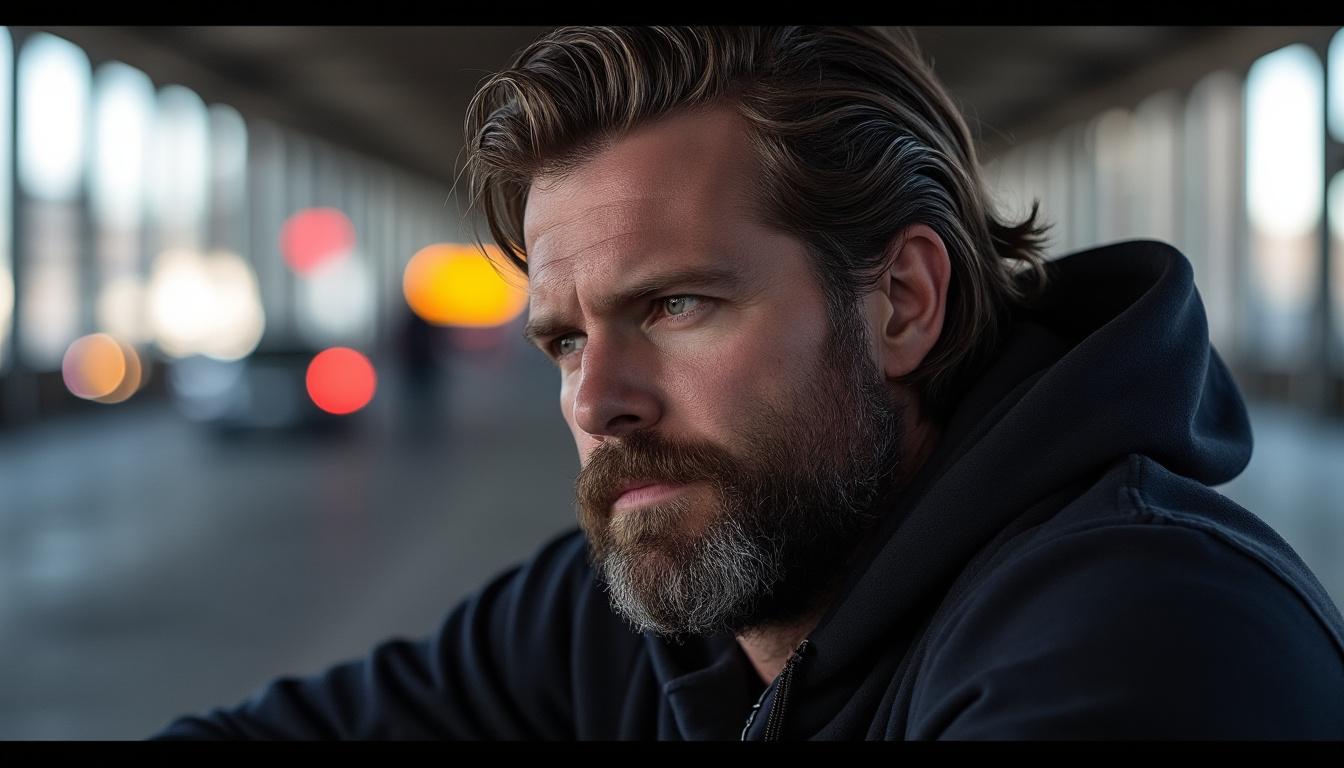
David Harbour’s New Challenge: Battling Middle Age
In recent discussions surrounding his latest role, David Harbour, well-known for his portrayal of Hopper in Stranger Things, opened up about a personal struggle that he believes surpasses any onscreen adversary, including formidable foes like Vecna and the infamous Thanos from the Marvel universe. During a red carpet interview at the premiere of his upcoming HBO series, DTF St. Louis, Harbour humorously referred to this new challenge as a “brutal monster that lives in the dark.” This metaphor resonates not just with fans of his work but also with anyone who has faced the uncertainties and inherent difficulties of aging.
Harbour, who is 50, shared insights about how this transition impacts both his professional life and personal identity. He has spent a major part of his career embodying fantastical characters, often battling literal monsters or supervillains. However, this latest “monster” he faces is significantly more complex and deeply rooted in the human experience—middle age. It represents a broader narrative about the challenges of growing older, which resonates with a diverse audience captivated by his earlier works.
In his interview, he discussed how the pressures of middle age manifest in various ways, from physical changes to emotional adjustments. Harbour noted that everyone encounters this dilemma, making it a universal theme. This exploration adds depth to his character in the new series, which delves into themes such as vulnerability and the quest for connection—factors that are often overshadowed in conventional stories about heroes and villains.
As Harbour transitions from fighting evil forces to grappling with more existential fears, he brings a refreshing perspective to the screen. The complexity of middle age presents itself as a significant emotional and psychological challenge, providing rich material for storytelling. The audience can expect to see this through the lens of his new character, Floyd, in DTF St. Louis. The show will explore relationships and personal struggles, providing a stark contrast to his previous action-oriented and high-stakes scenarios.

Acting Through the Lens of Vulnerability
Harbour’s character, Floyd, is designed to resonate with audiences who are navigating the tumultuous waters of middle age. The contrast between this character and his previous role as Hopper offers an intriguing narrative arc. While Hopper is typically portrayed as a masculine figure, filled with strength and determination, Floyd tends to exhibit a deeper emotional range, highlighting feelings of insecurity and uncertainty about life. This juxtaposition allows Harbour to showcase his acting capabilities, offering a richer, more nuanced performance.
In order to bring authenticity to Floyd, Harbour spent several years collaborating with the series creator, Steven Conrad. This extensive partnership allowed him to shape the character’s development, ensuring that it resonated with authentic human experiences rather than sticking to typical tropes seen in many characters of similar age. According to Harbour, this ability to mold the character is rare and invigorating, as it provides a platform for him to explore more vulnerable storytelling elements. The transparent examination of middle age speaks to a cultural moment where emotional honesty is valued over traditional masculinity.
Moreover, as Floyd grapples with his own vulnerabilities, viewers can expect to be challenged in their perceptions of aging and identity. The thematic essence of the series captures the trials of interpersonal connections and the intricacies of friendship as a person traverses the middle stages of life. Each episode promises to tackle subjects often overlooked in scripted television, marking a departure from surface-level storytelling.
The Transition from Supervillains to Real-Life Struggles
In popular culture, much emphasis has been placed on grandiose battles involving supervillains and supernatural threats. Both Vecna and Thanos represent extreme manifestations of evil, and the entertainment industry has long celebrated heroes who emerge victoriously against these formidable foes. However, David Harbour challenges that narrative by arguing that true resilience lies in confronting real-life dilemmas. Middle age, accompanied by existential questions and social pressures, often proves to be more daunting than any fictional confrontation.
This shift in focus represents a broader trend within Hollywood, where creators and audiences alike are seeking storytelling that reflects genuine human experiences. As highs and lows become more relatable, characters that function on a purely fantastical level are increasingly falling out of favor. Acknowledging this cultural shift, Stranger Things has captivated audiences by allowing characters to evolve in ways that mirror realistic human dynamics. Now, as Harbour moves on from the series, he intends to expand this thematic exploration.
Through DTF St. Louis, Harbour’s aim is to create relatable content that digs into the heart of human relationships. The series explores the entangled lives of three middle-aged characters dealing with love, friendship, and personal loss. The premise illuminates how these themes manifest in everyday life, allowing viewers to reflect on their experiences as they navigate similar tribulations.
| Character | Previous Role | New Role | Thematic Focus |
|---|---|---|---|
| David Harbour | Hopper (Stranger Things) | Floyd (DTF St. Louis) | Middle Age Challenges |
| Vecna | Villain | N/A | Supernatural Threat |
| Thanos | Villain | N/A | Cosmic Battle |
This evolution from confronting epic enemies to examining the nuances of middle age is compelling, as it allows for growth both in character development and narrative depth. Harbour’s willingness to embrace vulnerability reflects a changing dynamic not only for his acting career but also for the entertainment landscape as a whole.
Emotional Depth and Personal Growth in Performance
Another critical aspect of Harbour’s new journey lies in the emotional depth he brings to his performance. The transition from the conventional hero to a more multifaceted character allows him to showcase not only his acting prowess but also his personal growth. By engaging with these more relatable plights, he encourages a dialog regarding the challenges faced by many in society today.
The narrative in DTF St. Louis promises to explore intricate emotional landscapes, emphasizing that life is rarely black and white. Middle age is often filled with gray areas—whether that be in relationships or personal aspirations. The show provides an opportunity for Harbour to delve deep into human emotions, offering a refreshing departure from portraying one-dimensional characters.
Anticipating the Impact of DTF St. Louis on Audiences
As the premiere date for DTF St. Louis approaches, there is significant anticipation surrounding how audiences will respond to the themes of the series. The combination of dark humor and poignant storytelling aims to resonate with viewers in profound ways, especially those who grapple with the trials and tribulations of middle age. The show is not only an exploration of love and friendship but also a reflection on how these relationships can evolve and become complicated over time.
Harbour’s new direction could very well redefine expectations around what it means to portray vulnerability onscreen. The emotional resonance he brings to Floyd is both timely and essential, reflecting a larger cultural shift towards valuing authenticity over the hyper-stylized narratives often found in mainstream media.
Fans of Stranger Things will undoubtedly be keen to see how Harbour’s experiences throughout his past role inform his performance in DTF St. Louis. The intertwining of both universes, albeit in dramatically different tones, speaks to the actor’s growth—both personally and professionally. Such reflections raise important questions about identity, society, and how the collective experience of aging can be shared and understood.