
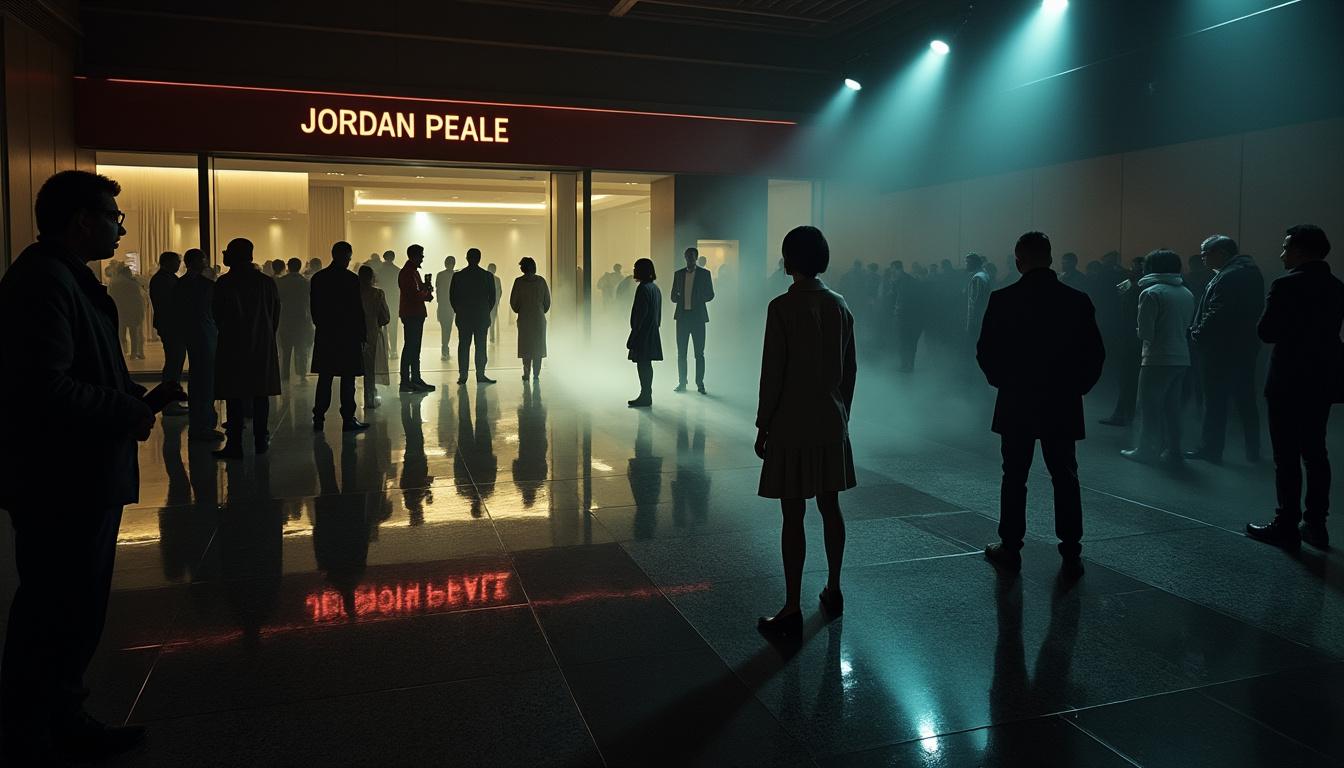
Jordan Peele’s New Horror Film: Themes and Influences
Jordan Peele has carved out a unique niche in the horror genre, often intertwining societal critiques with elements of psychological terror. In his latest film, “Him,” the narrative explores themes of identity, fame, and the darker sides of celebrity culture. The protagonist, Cameron Cade, played by Tyriq Withers, navigates the treacherous waters of his rising football career, only to be confronted by an obsessive fan. This incident not only triggers a physical trauma but also signals the beginning of a psychological spiral into obsession and paranoia, encapsulating the essence of contemporary fame.
The film’s exploration of toxic fandom echoes real-world instances, where individuals have faced dire consequences as a result of extreme idolization. From the strange relationship of fans with their heroes to the pressure athletes face from the public, “Him” serves as a cautionary tale that resonates with today’s discourse on mental health and the price of fame. Peele’s films often draw from real societal fears, leading to a deeper connection between the audience and the content, and “Him” is no exception.
The psychological aspects of “Him” also link back to Peele’s previous works, where horror serves as a metaphor. The influence of classic psychological thrillers shines through, resurrecting the fear of losing one’s identity in the chase for societal acceptance. The character’s descent into chaos raises questions about how much of oneself one is willing to sacrifice for success, making it a compelling watch for both horror aficionados and casual viewers alike.

A Closer Look at ‘Him’
“Him” follows Cameron Cade, whose life revolves around football. When a traumatic incident occurs, it becomes more than just physical injury; it symbolizes a broader crisis of identity. The film intricately details how an external force—a fan—can influence a person’s life in unsettling ways. This invasion of personal space and psyche is depicted with chilling realism, allowing viewers to relate to the fears that lurk beneath the surface. As the story unfolds, viewers are led down a twisting path of psychological horror that ultimately questions the moral compass of fan culture.
The film also foregrounds themes of mentorship, illustrating how power dynamics shift when one’s idol becomes a potential threat. Isaish White, portrayed by a yet-to-be-named veteran actor, serves as both a guiding light and a looming danger for Cade. The character’s narcissism transforms the initial mentorship into a volatile relationship, pulling Cade deeper into a disorienting world of manipulation and control.
Critical Reception and Controversy Surrounding ‘Him’
Spark debates upon its release, “Him” has garnered a polarized response from critics and audiences alike. Currently holding a score of only 31% on Rotten Tomatoes, based on 229 reviews, many have questioned whether the film meets the high expectations set by Peele’s previous projects like “Get Out” and “Us.” While some hail it as a daring exploration of modern horror, others criticize its pacing and narrative coherence.
Despite the divided response, the film has sparked captivating discussions on social media, demonstrating Peele’s ability to ignite controversies that linger long after the credits roll. Critics pointed out that the film’s ambition may have outpaced its execution, leaving some viewers craving more depth in character development and plot intricacies. Nevertheless, “Him” has also found a solid fan base, particularly among viewers who appreciate its bold take on societal issues.
This controversy is not new for Peele; his previous works have often invoked similar dialogues about race, identity, and culture. By daring to provoke discomfort, Peele invites viewers to reflect on their perceptions of horror and the underlying societal themes that inform them. Audiences might find that revisiting the film reveals layers of meaning that are not always immediately apparent, generating discussions that extend far beyond mere entertainment.
Box Office Performance and Streaming Redemption
Upon its theatrical release, “Him” struggled to find its footing at the box office, grossing a mere $28 million against a budget of $27 million. The less-than-stellar performance could be attributed to various factors including mixed reviews and intense competition from other major releases at the time. However, the film has now found a second life through its premiere on Netflix, offering a chance for wider audiences to experience Peele’s latest work and form their own opinions.
Streaming platforms have reshaped the way films are consumed, often providing critical second chances to titles that may have struggled in theaters. As this controversial horror film gains traction on Netflix, it sparks discussions about the evolving landscape of cinema and how the metrics of success are shifting. In many ways, “Him” embodies this transformation; ensuring that even if a film falters initially, it can still find an audience eager to engage with its narrative.
Discussions about the film’s content have increased since its Netflix debut, as viewers who may have shied away from theaters now feel encouraged to partake in these conversations. The convenience of streaming allows audiences to explore films more freely, giving them the opportunity to engage with complex themes at their own pace.
The Creative Team Behind ‘Him’
The film was directed by Justin Tipping, recognized for his skill in integrating tension within personal relationships. The screenplay was crafted by Zack Akers and Skip Bronkie, known for their work on “Limetown.” Together, they bring a fresh approach to the horror genre, intertwining elements of psychological thriller with sports drama. The collaboration between these creators highlights the importance of diverse storytelling perspectives in the current film landscape.
Peele’s production company, Monkeypaw Productions, has consistently pushed the boundaries of what horror can convey. This film, with its unflinching look at obsession and identity crisis, is a testament to that vision. The involvement of a varied cast, including Marlon Wayans and Julia Fox, further enhances the film as they dive deep into the psyche of their characters, making the narrative all the more captivating.
Beyond the cinematic aspects, the technical department, featuring cinematographer Kira Kelly and composer The Haxan Cloak, plays a crucial role in shaping the film’s atmosphere. The synthesis of sound and visuals works in harmony to draw viewers into Cade’s chilling descent, ensuring that the tension is palpable and unrelenting.
| Team Member | Role |
|---|---|
| Jordan Peele | Producer |
| Justin Tipping | Director |
| Zack Akers | Screenwriter |
| Skip Bronkie | Screenwriter |
| Kira Kelly | Cinematographer |
| The Haxan Cloak | Composer |
The Audience Reaction: What Viewers Are Saying
Following the premiere of “Him” on Netflix, audience reactions have swelled, captivating both fans of Peele’s previous works and newcomers alike. Some viewers laud the film as a “bold exploration of identity and obsession,” praising its ability to blend horror with real-life themes. They appreciate the unsettling yet thought-provoking nature of the narrative, which leaves them contemplating the complexities of fame and the human psyche long after the viewing.
Conversely, some viewers found certain aspects challenging. The pacing and character arcs have received mixed feedback, with some feeling that the film could have explored its themes in more depth. Nevertheless, this polarization seems to be part of Peele’s intention, as he often challenges viewers to confront uncomfortable truths about society and themselves.
As the film circulates on social media platforms, fans are encouraged to dissect its layers, leading to vibrant discussions around its meaning and societal implications. This exchange of ideas fortifies Peele’s legacy as a director who doesn’t merely aim to entertain but to invoke contemplation and critique.