

The Rising Tension in ‘The House of Dynamite’
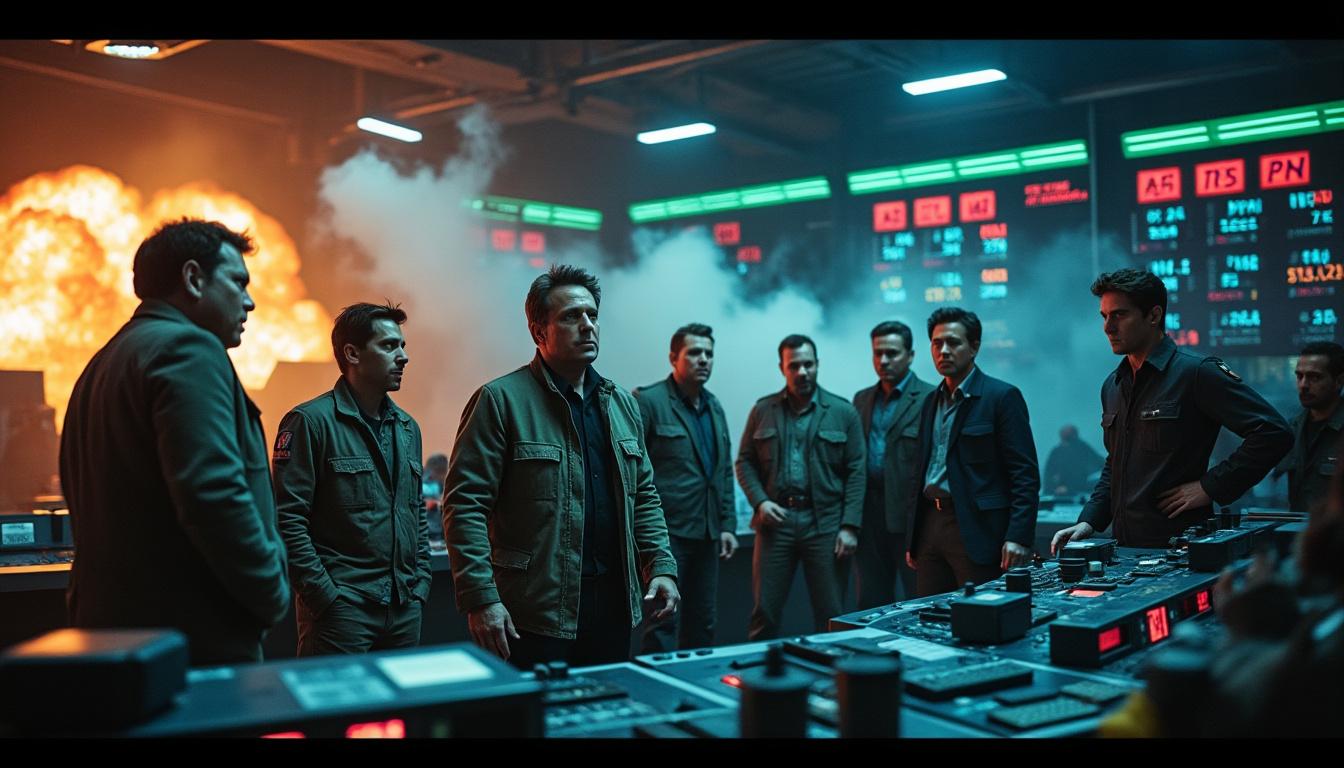
‘The House of Dynamite,’ directed by the acclaimed Kathryn Bigelow, explores a critical question: what if a nuclear missile is launched at the United States without knowing who is behind the attack? This concept is central to the movie, fueling tension throughout its duration. The film showcases a myriad of perspectives from various characters, ranging from policymakers to military personnel, each with unique opinions on how the U.S. should respond. An ensemble cast featuring renowned Hollywood actors such as Idris Elba, Rebecca Ferguson, and Gabriel Basso breathes life into these complex dilemmas. Their performances delve not only into the implications of nuclear threats but also into the emotional and psychological effects of such decisions.
As the plot unfolds, audiences are immersed in a high-paced narrative rife with action and suspense. The film identifies the intricacies of decision-making under pressure, particularly for the character portrayed by Idris Elba, who faces the monumental task of deciding whether to launch a counterattack, without clear answers to the questions at hand. Bigelow effectively uses dramatic scenarios to showcase the heaviness of these decisions, juxtaposing personal stakes with national security threats.
By presenting a varied cast of characters who express differing views, the film emphasizes the complexity of military and governmental responses. For instance, one character’s compelling monologue raises significant ethical concerns about retaliation in the face of ambiguity—any reactive stance could lead to devastating consequences. This adds a layer of moral questioning to the film, urging audiences to reflect on historical precedents where similar dilemmas have unfolded.
The storytelling is further enriched by intense visual and auditory cues that build urgency, making the experience gripping. Viewers are not just passive observers; they are alongside the characters as they wrestle with grave choices, critiquing how narrative decisions intersect with personal beliefs. Within the first hour, the pacing and character development lead to a crescendo that vividly captures the potential chaos of an international incident.
Character Development and Ethical Dilemmas
While the film contains a solid foundation of character arcs, it also depicts the ethical dilemmas associated with nuclear warfare. Tracy Letts’ character articulates a view that encapsulates a fierce debate: should the U.S. act decisively against the unknown aggressor? His character’s rationale revolves around the belief that failing to respond could lead to further threats, echoing a sentiment prevalent in military discourse.
This theme resonates deeply with historical incidents. The Cuban Missile Crisis, for instance, represented a time when leaders faced an ambiguous threat, prompting a careful balancing act between aggression and caution. Much like in ‘The House of Dynamite,’ the choices made in moments of crisis impact not just the current situation but the future landscape of international relations.
- The moral complexities of responding to threats.
- Character dynamics that amplify the narrative depth.
- Historical parallels that provide context for decisions made in the film.
This focus on character depth is commendable but is ultimately overshadowed by the film’s climactic moments. Viewers may find themselves emotionally invested in the characters, which sets the stage for a stunning finale. Unfortunately, this connection does not receive the satisfying payoff that many expect.
As the film reaches its peak, the tension reaches a palpable level as characters confront their fates. However, this buildup culminates in an abrupt ending that leaves viewers with more questions than answers.
An Ambiguous Ending: A Bold Narrative Choice
The final act of ‘The House of Dynamite’ has sparked significant debate among audiences. The film concludes without revealing the ultimate fate of the missile aimed at the United States. Instead, viewers are met with a hard cut to credits as Idris Elba’s character contemplates a decision with enormous consequences. This abrupt finale prompts a critical examination of storytelling in contemporary cinema.
Some film critics see this as a bold choice by Bigelow, emphasizing the complexity of the situation presented. Many believe that a definitive conclusion would risk oversimplifying the multivalent discussions embedded within the narrative. Instead, by leaving the resolution open-ended, the film encourages audiences to grapple with the uncertainties inherent in real-world diplomacy and crisis management.
However, this decision has not come without backlash. Critics argue that while open-ended conclusions can provoke thought, they can also frustrate an audience that has invested two hours in building familiarity with the characters. The lack of a clear resolution may leave some feeling unfulfilled, leading to feelings that the film failed to deliver a satisfactory climax.
Furthermore, the tensions highlighted throughout the film are left hanging. The culmination of personal conflicts and national crises feels incomplete, drawing criticism regarding narrative pay-off. Despite the rich groundwork laid in establishing character arcs and emotional stakes, a lack of closure can diminish these efforts.
| Element | Impact | Viewer Reactions |
|---|---|---|
| Open-ended conclusion | Invites reflection on real-world issues | Divided opinions |
| Character development | Enhances emotional investment | Frustration over unresolved arcs |
| Nuclear threat scenario | Emphasizes complexity of decisions | Engagement with political discussions |
This technique has been used in other prominent films, such as Christopher Nolan’s ‘Inception,’ where audiences are left pondering the implications of the ending. However, in a film tackling real-life issues, the stakes feel particularly heightened.
A Pattern in Contemporary Filmmaking
This pattern of ambiguous endings has become a hallmark of modern cinema. While it often leads to rich discussions among viewers, it can polarize audiences. The expectation of closure often clashes with the artistic choice to opt for uncertainty.
Such narrative choices highlight a greater trend within the industry: as streaming platforms like Netflix rise in popularity, storytelling expectations evolve. Audiences are becoming accustomed to exploring thematic complexities without the necessity for definitive conclusions. However, this alteration may not resonate with all, particularly those who favor traditional storytelling conventions.
This divergence has implications for the broader scope of film criticism. Critics may find themselves grappling with the demands of audiences who seek resolution, pitted against filmmakers willing to push boundaries. The outcome raises questions: should films aim to satisfy the audience’s desire for closure, or should they strive for deeper thematic explorations, regardless of resultant frustration?
The Character vs. Narrative Dilemma
The character-centric approach employed in ‘The House of Dynamite’ elevates emotional stakes while prompting critical issues around the narrative structure. Despite Bigelow’s calculated character development, the disarray evident in the film’s resolution ultimately undermines these efforts. The film draws attention to the intricate lives of individuals touched by violence and conflict, yet leaves them in a suspended state, particularly the characters played by Ferguson and Basso, whose arcs felt particularly significant.
To illustrate, a detailed exploration of various perspectives showcases how differing motivations shape each character’s response to the threat. These character studies build a timely dialogue about risk and responsibility, often leading viewers to reflect on their interpretations of individual agency. Nevertheless, by concluding on such a cliffhanger, the audience is deprived of an emotional resolution.
Character motivations pose intriguing insights into identity, ethics, and survival instincts. However, when these individuals are depicted in scenarios demanding swift resolution, the pressure intensifies. The intense focus on personal journeys juxtaposed with global crises serves to unearth the inherent risks associated with inaction. Yet, the undefined conclusion leaves a bitter echo of unresolved tensions.
- Analysis of character responses to nuclear threats adds depth.
- Themes of agency and accountability surface significantly.
- Cliffhanger endings challenge audience satisfaction.
Ultimately, while Bigelow’s film excels in character work, the payoff in narrative structure falters. Audiences may appreciate the film’s intention yet feel shortchanged by its refusal to provide clarity. Given the context of perpetual political unrest within the contemporary landscape, ‘The House of Dynamite’ inadvertently raises a crucial conversation about representation and accountability in storytelling.
Cinematic Context and Legacy
‘A House of Dynamite’ is not merely a cinematic experience but a lens through which to evaluate broader social narratives surrounding nuclear threats. Since its release on Netflix, it has sparked conversations about the nature of crisis management, political accountability, and personal ethics in a time of uncertainty. The film can be positioned within a modern genre focused on political thrillers, where narratives often teeter on the precipice of fear and hope.
Its diverse ensemble cast serves as a significant part of this canvas, representing various perspectives that energize the action. Yet, even as critics underscore the film’s ambition, the unresolved finale stirs mixed reactions. The landscape of political thrillers has dramatically evolved, prompting audiences to engage with complex threats on a moral level—’The House of Dynamite’ stands at the forefront of this trend.
This film is a commentary on the very real fears woven into the fabric of global politics, challenging viewers to scrutinize the implications of their choices as they relate to community and nation. The production effectively encapsulates a world rife with tension while prompting audiences to reflect on their roles within these narratives.
| Film Element | Influence on Audience | Critical Reception |
|---|---|---|
| Political Themes | Engagement in discussions about ethics | Mixed to positive |
| Star-packed cast | Heightened emotional investment | Generally praised |
| Climactic tension | Lessons on crisis management | Controversial in discussions |
In conclusion, while audiences retain an appreciation for complex storytelling, the balance between character development and narrative satisfaction remains a crucial challenge in contemporary film. As seen in ‘The House of Dynamite,’ the line between a bold choice and one that disappoints can be incredibly thin. Audiences are left to ponder not only the fates of beloved characters but also the broader implications of a narrative that reflects a deeply uncertain world.